Masters of the Air: On Screen vs. The Real Thing (Episode 1)

The big and small historical details the show nails.
A side-by-side look at images from the war and the series.

It’s no surprise the long awaited series Masters of the Air has skyrocketed to the top of the charts – with more viewers in its opening weekend than any Apple TV+ series (in its first season) to date. 

It masterfully – and accurately – tells the story of the Bloody 100th, one of forty heavy bomber groups of the 8th Air Force during WWII. They were pioneers of the air war, fighting Hitler from the skies above Europe and dropping bombs on strategic targets almost two years before Allied troops landed on the beaches of Normandy. 

The show portrays a true story. Behind the scenes, production was laser focused on getting the historical details – big and small – exactly right.

So, how did Masters of the Air do in mastering the history? Impeccably well, if you ask me.

This blog series will go episode by episode, comparing stills from the show to wartime images – so you can decide for yourself.


ON SCREEN vs. THE REAL THING
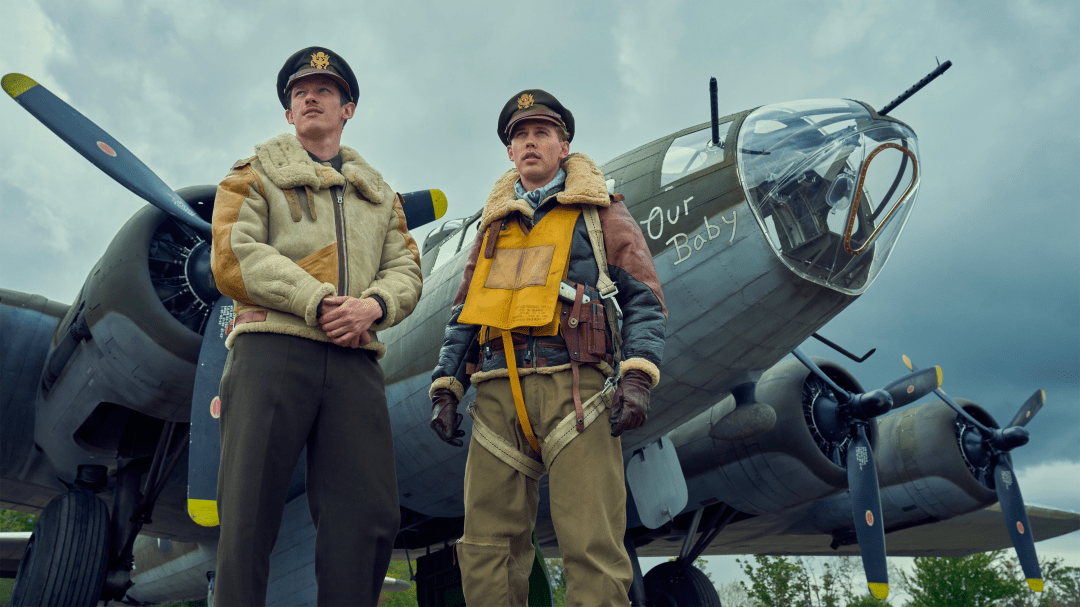
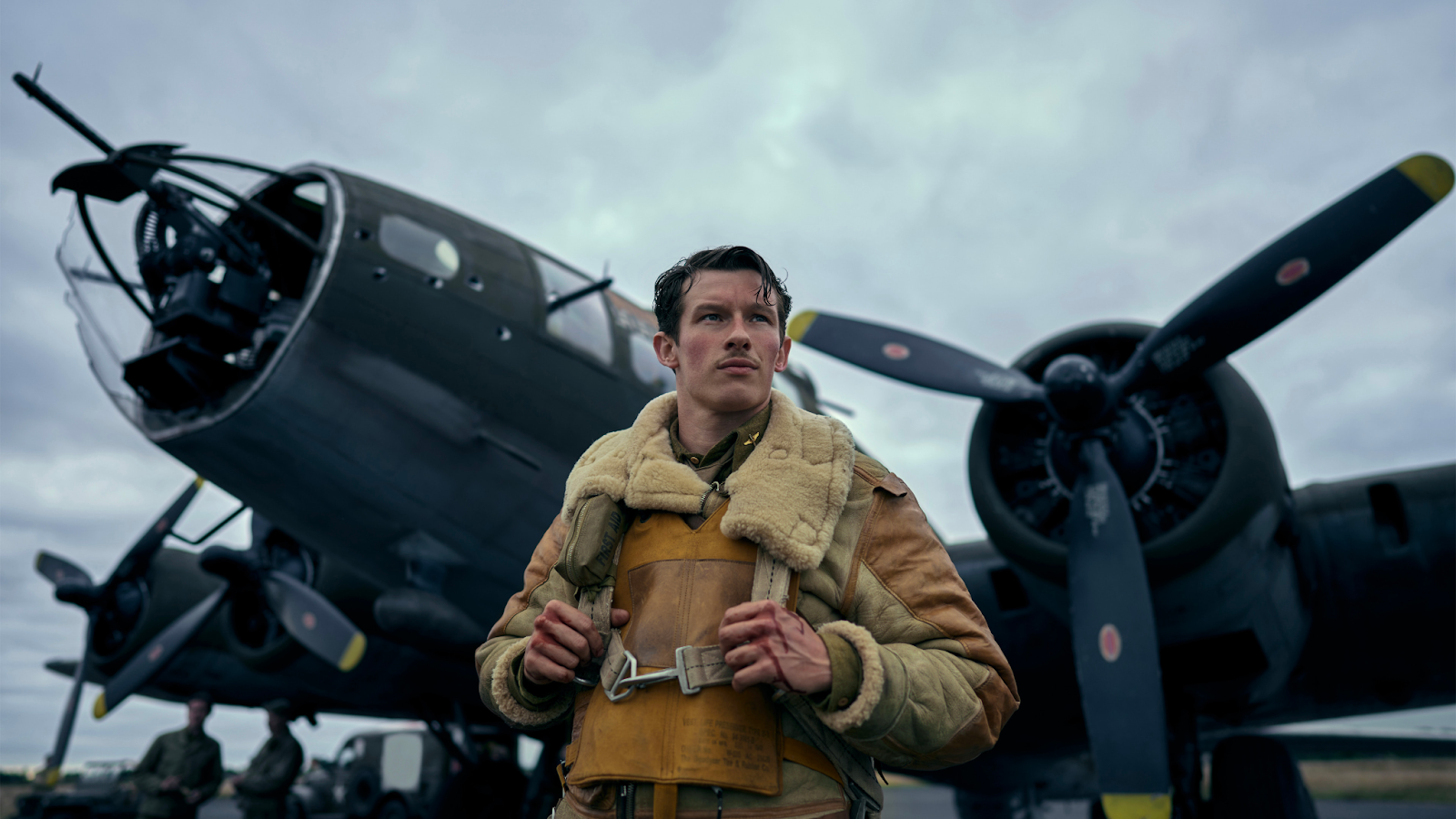
Top – Egan and Cleven stand in front of the B-17 ‘Our Baby.’ (Photo by Apple TV+).

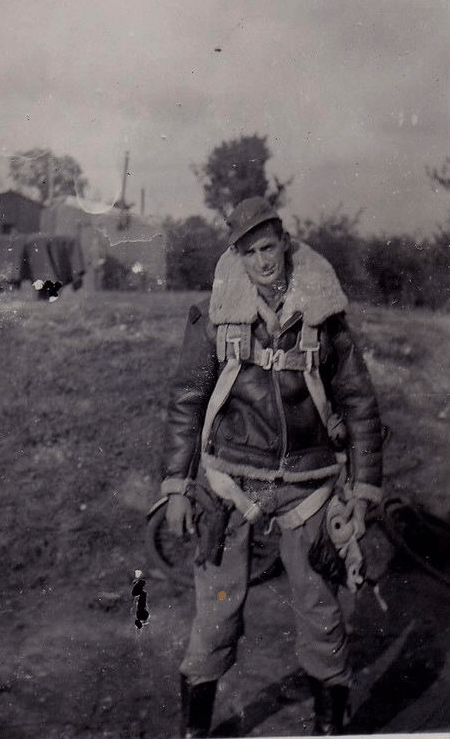
Bottom – A wartime image from the heavy bomber base at Shipdham of an airman mission ready.

Let’s get into Episode 1,  where we meet the protagonists Egan and Cleven, airmen assigned to the 8th Air Force who are en route to war. Their destination is England, where their first harrowing missions begin.

In this episode, we’re introduced to the heavy bomber base at Thorpe Abbotts, the place they’ll call home during the war. We meet their machine of war – the B-17 bomber, with its claustrophobic, primitive interior, and the combat gear they must don to fly at altitude where temperatures hover at negative 50 degrees.


Getting Around Base – Jeeps

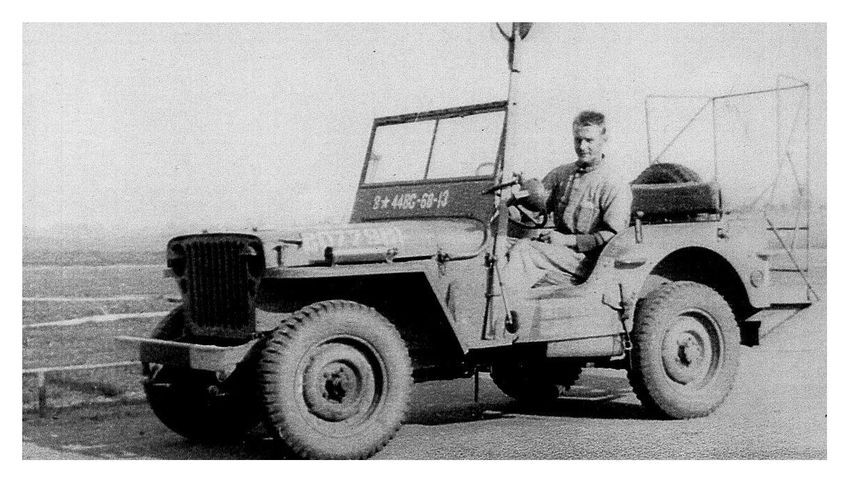
ON SCREEN vs. THE REAL THING: Top Brass on Base got around Base by Jeep

On screen, we see Egan pick Cleven up in a Jeep after landing at Thorpe Abbotts. Having access to a vehicle to get around a sprawling 8th Air Force base was a luxury reserved for the top brass of a bomb group – including the likes of Egan.

Everyone else on base walked, and they walked miles everyday. Getting between the airfield, the living site, and the mess hall alone required multiple miles of walking, often through mud and rain. Cleven has yet to face England’s dismal weather.

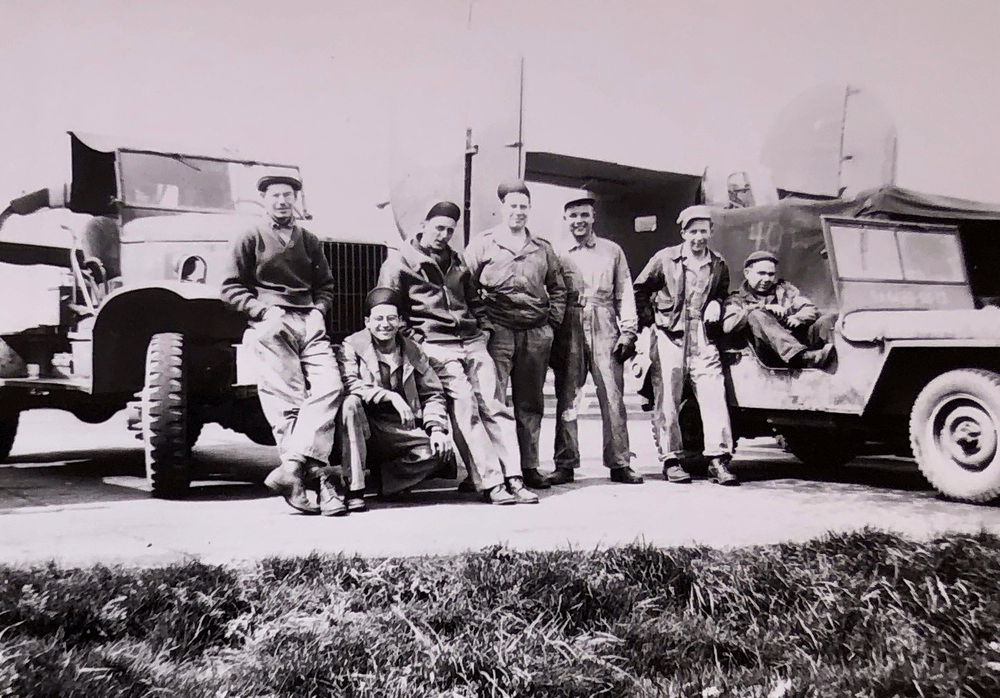
As the episode progresses, Jeeps buzz around the airfield, transporting men and material in the frenzied activity before a mission, dropping airmen off in the far corners of the airfield, where their bombers were parked on hardstands circling the runway.

Urgent news traveled by Jeep, too. A ground crewman at another 8th AF heavy bomber base recalled the tense moments waiting for the bombers to return: “The many stories of stragglers being jumped by enemy aircraft continued to send chills up my spine. And hope was almost gone. Too upset to leave the line, I kept busy moving things around, making sure everything was in readiness for her return; kicking the weeds, watching the sky, and then the Jeeps and power wagons as they busily traveled the perimeter, returning the crews for debriefing. Then suddenly, one of the Jeeps turned in and screeched ‘They’re safe!’ They landed on the coast with just an engine out. I almost needed a parachute to bring me safely back to earth.”


Getting Around Base 2.5 Ton Trucks

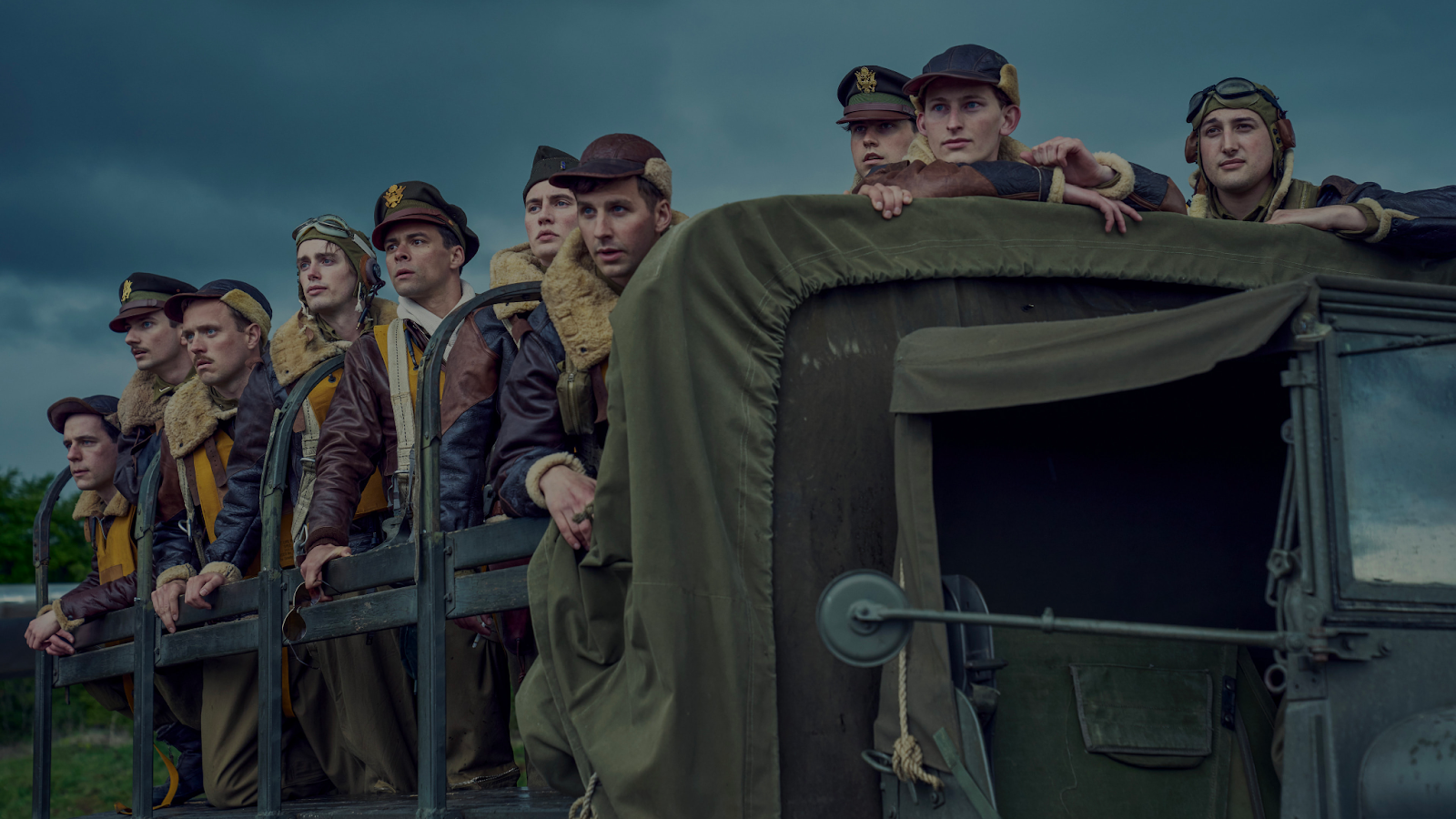
ON SCREEN vs. THE REAL THING: 2.5 Ton Trucks used to Transport Airmen to and from Missions

Episode 1 brings the Bloody 100th to England. Crosby arrives at Thorpe Abbotts after mistaking the French coast for England – and running into flak. Bubbles greets Crosby from the back of the truck, which has been sent to the hardstands surrounding the runway – where the bombers park.

Airmen rode in the bed behind the cab, seated on two wooden benches. A canvas canopy sometimes was strung above. It was designed for eight men – but more were often squeezed on board.

2.5 ton trucks were needed to transport crews between their living sites and the airfield in the pre-dawn hours before a mission. Miles could separate the two because 8th AF bases were designed as dispersed sites to make it harder for Luftwaffe attacks to destroy the entire base.

2.5 ton trucks did more than transport men to and from war. Airmen happily hopped aboard in pursuit of fun. Liberty Runs took airmen from their rural airbases in East Anglian villages to larger surrounding towns like Norwich – where pubs, restaurants, dancing clubs – and women – offered a reprieve from war. They got three hours of freedom – from 7 to 10 PM – when pubs closed and the airmen were collected.

Riding in a 2.5 ton truck was not comfortable. An 8th AF veteran recalled, “We bounced around on those hard wooden seats in the back end. On he way back to the base we often were eating fish and chips, wrapped in newspapers, and it was a hot delicious delight.”


Sweating out a Mission’ on the Runway

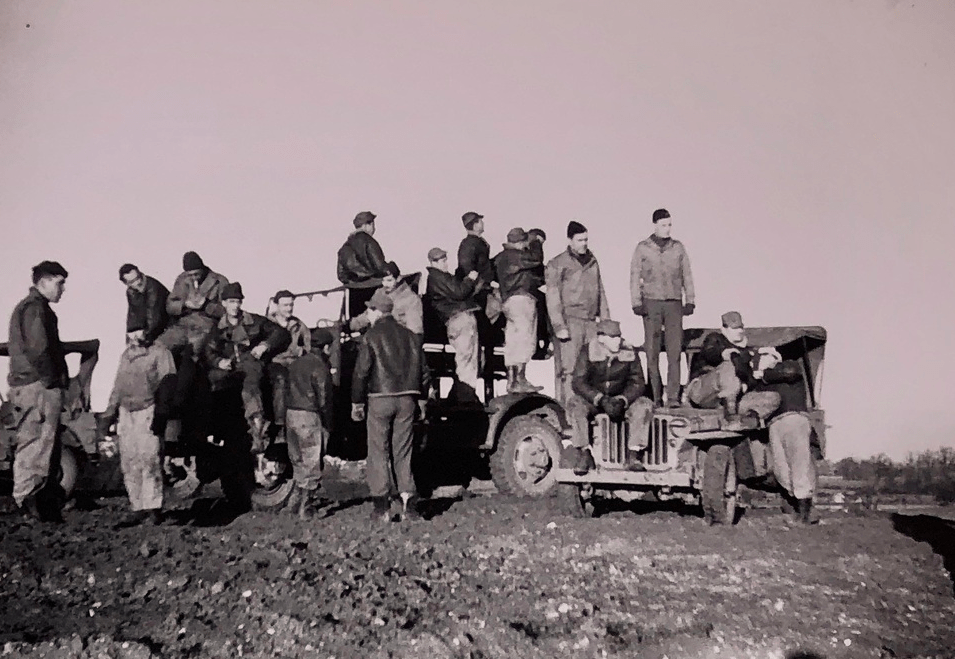
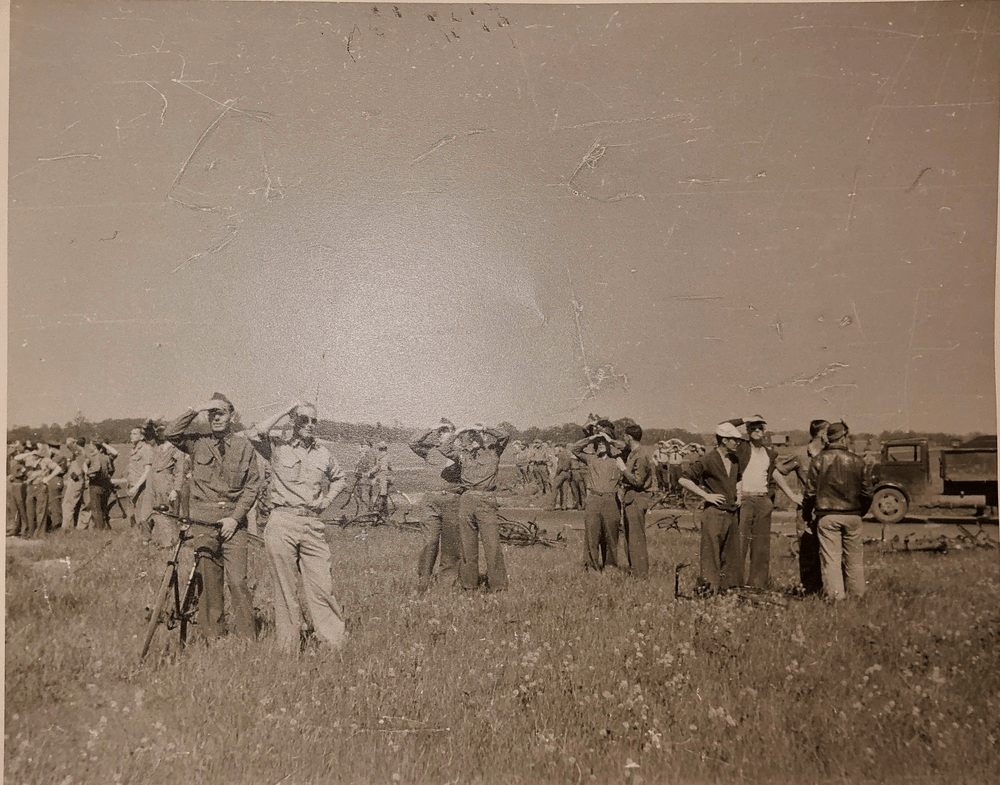
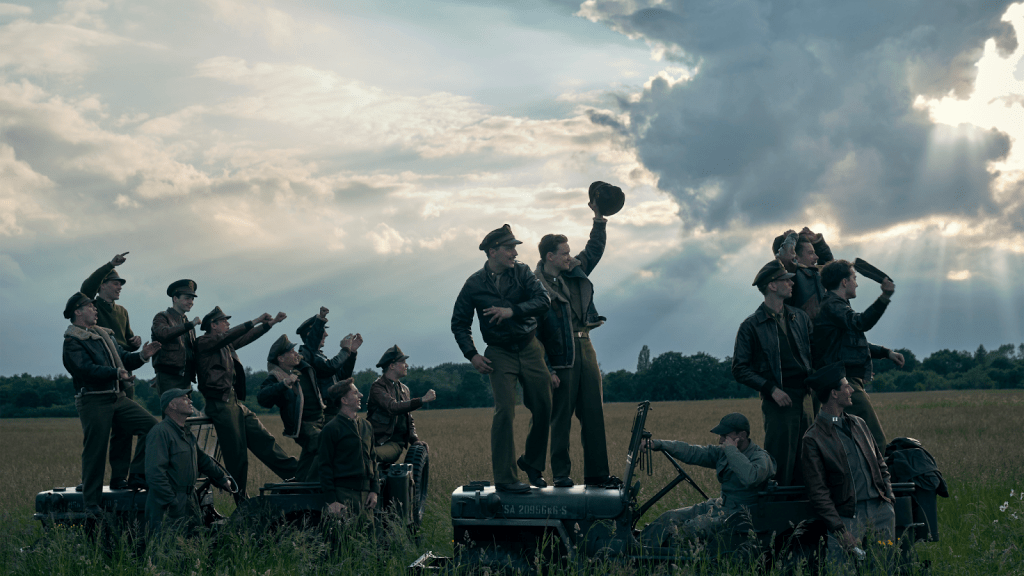
ON SCREEN vs. THE REAL THING: Waving Crews off to Combat & Sweating out a Mission on their Return

On screen, we see Cleven’s first mission begin. B-17s file into line on the perimeter track around the runway, taking off at 30-second intervals. The signal caravan on the runway flashes its light (the black and white checkered trailer), signaling the pilot on deck to push the throttle. This sequence is historically spot on – artfully capturing the complex choreography of a mission.

As Cleven and Biddick speed down the runway, a bevy of ground crewmen stand on a jeep, waving and cheering the crew on to their target. Even though they’re just beside the concrete runway, they’re nestled in the tall grass of this former farmland, against a backdrop of blue skies. It’s an idyllic scene, a place where the machines of war are out of place.

This scene is a carbon copy of how missions began at 8th AF bases across East Anglia – at least during the few short months when England’s skies were as sunny and clear as we see in this episode. More often than not, the scene beside the runway was a cold, damp, muddy mess – as seen in the real wartime image below.

At the end of a mission, when bombers were expected to land, ground crews once again lined up beside the runway, anxiously awaiting the group’s return. Ambulances and medical staff waited there too, ready to rush toward ailing bombers and injured men before their props even stopped turning, just like we saw in episode 1.

It came to be known as sweating out a mission. They waited anxiously, peering skyward, squinting to spot the bomber stream on return. Then, the counting began, hoping to count all the ships that left at dawn.

On Cleven’s first mission, three crews didn’t return.

The Cockpit & the Captain
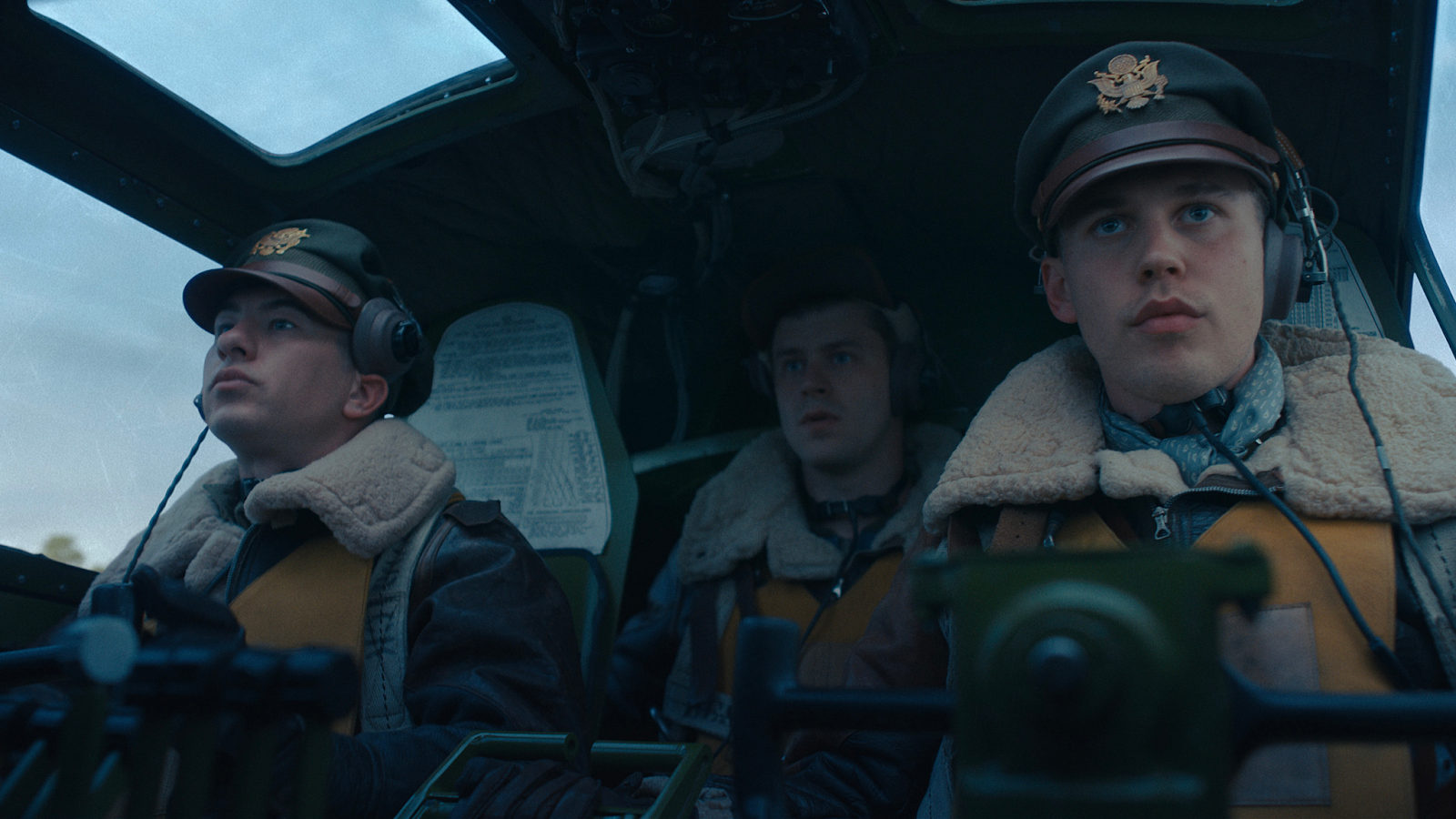
ON SCREEN vs. THE REAL THING: The Cockpit of a Heavy Bomber

Episode 1 introduces us to the vehicle of the strategic bombing campaign. The B-17 Heavy Bomber is a character in its own right says writer John Orloff.

And the cockpit is its nerve center, from which the Captain orchestrates the intricate 10-man dance of a heavy bomber mission, all the while manning the controls of an incredibly complex machine.

As Cleven takes off for Bremen, we get an up close look at the cockpit – and the instrument panel teeming with gauges and switches. It’s undisputed the series nailed reproducing the B-17’s cockpit, and that was no small task. The B-17’s sister ship (the B-24) had 81 cockpit gauges and controls, a 57-item checklist for takeoff, and a 27-item checklist for landing.

The cost to produce one heavy bomber in wartime was $120,000 – or $2.2 million dollars today. Challenging to operate and expensive to replace, the B-17 required a steely, competent leader in the cockpit. Over Bremen, we see Cleven reckon with the horrors of the air war for the first time – flak, fighters, and bombers in flames. He grapples with fear, frustration, shock, and sadness – but never loses his cool or composure.

As the air war began in earnest, 8th AF top brass struggled how to evaluate a pilot’s ability in combat, where survival hinged, “not the mechanics of reading gauges and flipping switches, but the manipulation of flight controls and power settings for optimal efficiency and safety of the airplane. The even more difficult aspect of piloting to measure was judgment. How will would a pilot decide whether to land or to go around whether to bail out or attempt a dangerous landing? How easily would he panic?” (Mahoney, Reluctant Witness)

Cleven did not panic. But he lands in a state of shock – tracing his hand over the holes flak pierced in his bomber. Why didn’t you tell me what it was like, he asks Egan back on base. Here, we see the roots of combat fatigue (the AAF’s wartime vernacular for PTSD) planted in Cleven.


The Flying Clothes
ON SCREEN vs. THE REAL THING: Flying Clothes

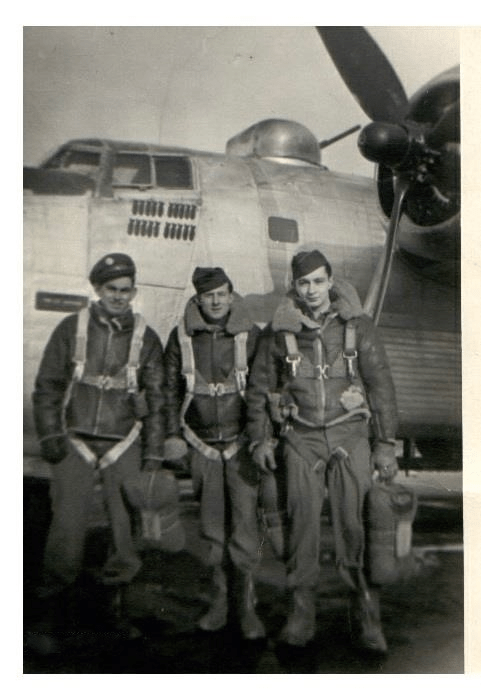
Egan’s first mission comes at the top of Episode 1. On the hardstand before it begins, airmen are swollen from all the gear they’re wearing.

At altitude, temperatures hovered around -50 degrees Fahrenheit – the same temperature as the South Pole. Flying clothes were all that protected airmen from the deathly bitter cold.

Drying Rooms were specially heated buildings on base where airmen got dressed. “Getting dressed for altitude flying is quite a job,” said 8th AF veterans Gerald Gross during the war.
“First came our electrical flying suit, an extra pair of wool socks, heated shoes, summer flying suit, leather flying shoes, a 45 pistol slung gangster fashion around the chest, Mae west life jacket, parachute harness, silk gloves, electric gloves, flying helmet, goggles, and lastly an oxygen mask strapped to the side of the helmet.”

All told, it was 80 pounds of gear.


(Check out the Episode 2 Recap here.)

What do I know? I’m the granddaughter of an 8th Air Force veteran who flew 42 missions from Shipdham on a B-24 Liberator (the arguably better bomber – but we’ll leave that for another day). Over the last six years, I uncovered my grandfather’s war that he took to the grave – then sought to make it easier for others like me to find long lost stories from the war – by building a data dashboard and digital archive for my grandfather’s group. I’ve also written extensively about the 8th Air Force during WWII, for publications like NatGeo and Insider.  
10 Little-Known Facts about American Airmen in WWII

May 8, 2020 marked 75 years since war in Europe ended in World War II. On the same date in 1945, V-E day celebrations were raucous after six years of prolonged war.

Commemorating the end of the war in Europe means remembering the men who fought it and the reality of their wartime lives.

We stand alone together” has come to define the ethos of the Greatest Generation’s WWII fight.

Today, amidst the COVID-19 pandemic, “we stand together alone” captures the ethos of a very different war, one that can only be won by staying apart.

The only analogy to the current pandemic in living memory is that of WWII. It was a protracted six-year battle. Life was upended. Death was omnipresent. But it was also replete with hope for a victorious conclusion.

Few servicemen had an experience more isolating than airmen. Missions lasting the better part of a day were spent in a tin can with only one’s crew. There was an inherent discomfort in the unpressurized, unheated fighters and bombers necessitating oxygen masks and protective equipment. For Allies, the air war fought from England was the last vestige of hope in the fight for the western world when all of Europe fell to Hitler.

Let’s take a page from the past to look at ten little-known facts about wartime life in England for American airmen whose collective efforts led to Victory in Europe:

1. American troops invaded England in late 1942. It’s remembered as the “Friendly Invasion.”

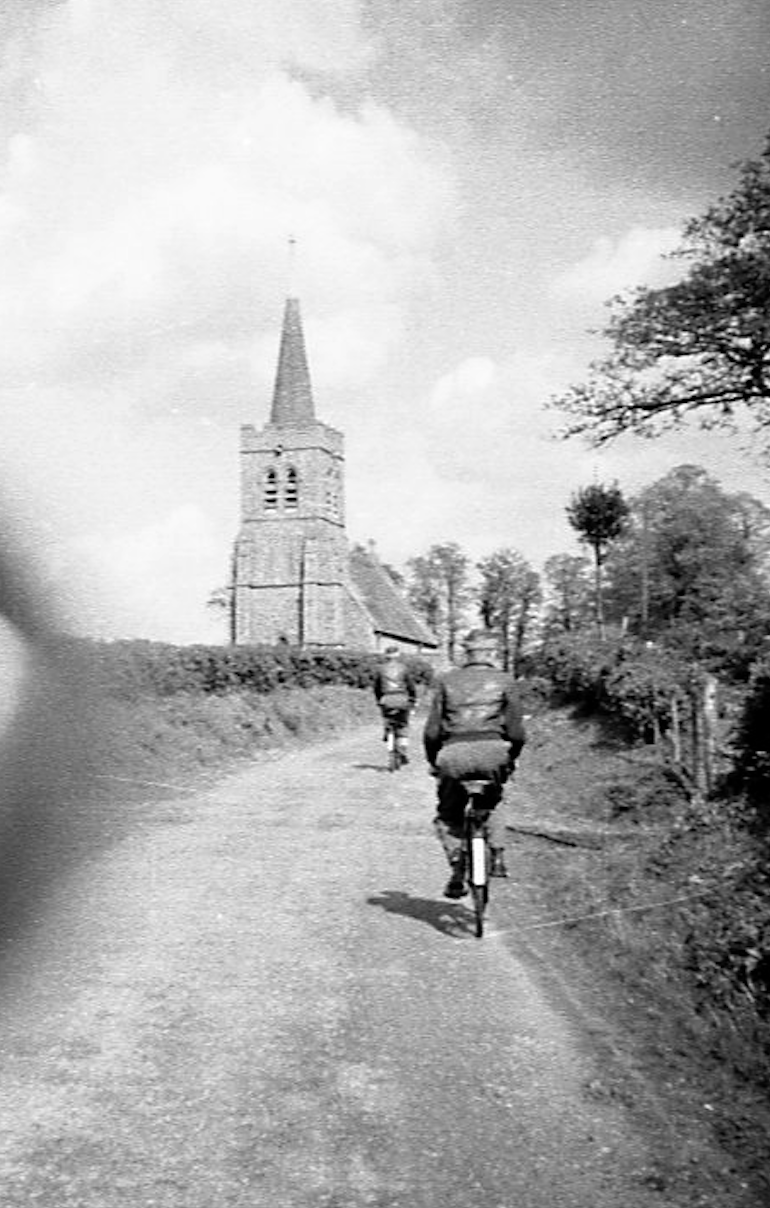
Top: Airmen of the 44th Bomb Group ride bikes in Shipdham Village. (Source: Shipdham Flying Club Museum) Middle: An English woman works on a farm abutting a heavy bomber base. B-17s are parked in the background. (Source: NARA) Bottom: Airmen of the 44th Bomb Group pictured in from of the Royal Standard Pub in Shipdham Village with the English proprietor. (Source: Shipdham Flying Club Museum)

In late 1942, droves of American airmen descended on East Anglia, the protruding thumb of England that looks out on the Normandy coast.

Over 350,000 Americans were based in East Anglia during the War organized under the auspices of the 8th Air Force. The pastoral countryside home to farms and storybook English villages transformed into an ostensible aircraft carrier during WWII. Over 50 air bases were hastily constructed for wartime operations.

Life in villages dotting the East Anglian countryside was quiet. The brashness and vigor of American airmen clashed with the more subdued English way of life. By war’s end, a fondness transcending time developed between the English and the Americans that came to be known as the “Friendly Invasion.”

Today, an American boasting a connection to the air war is greeted in East Anglia with open arms and profuse thanks for what our forefathers did in the War.

2. Flying from the United States to Europe took over twenty hours, including an overnight pitstop in Morocco or Greenland.

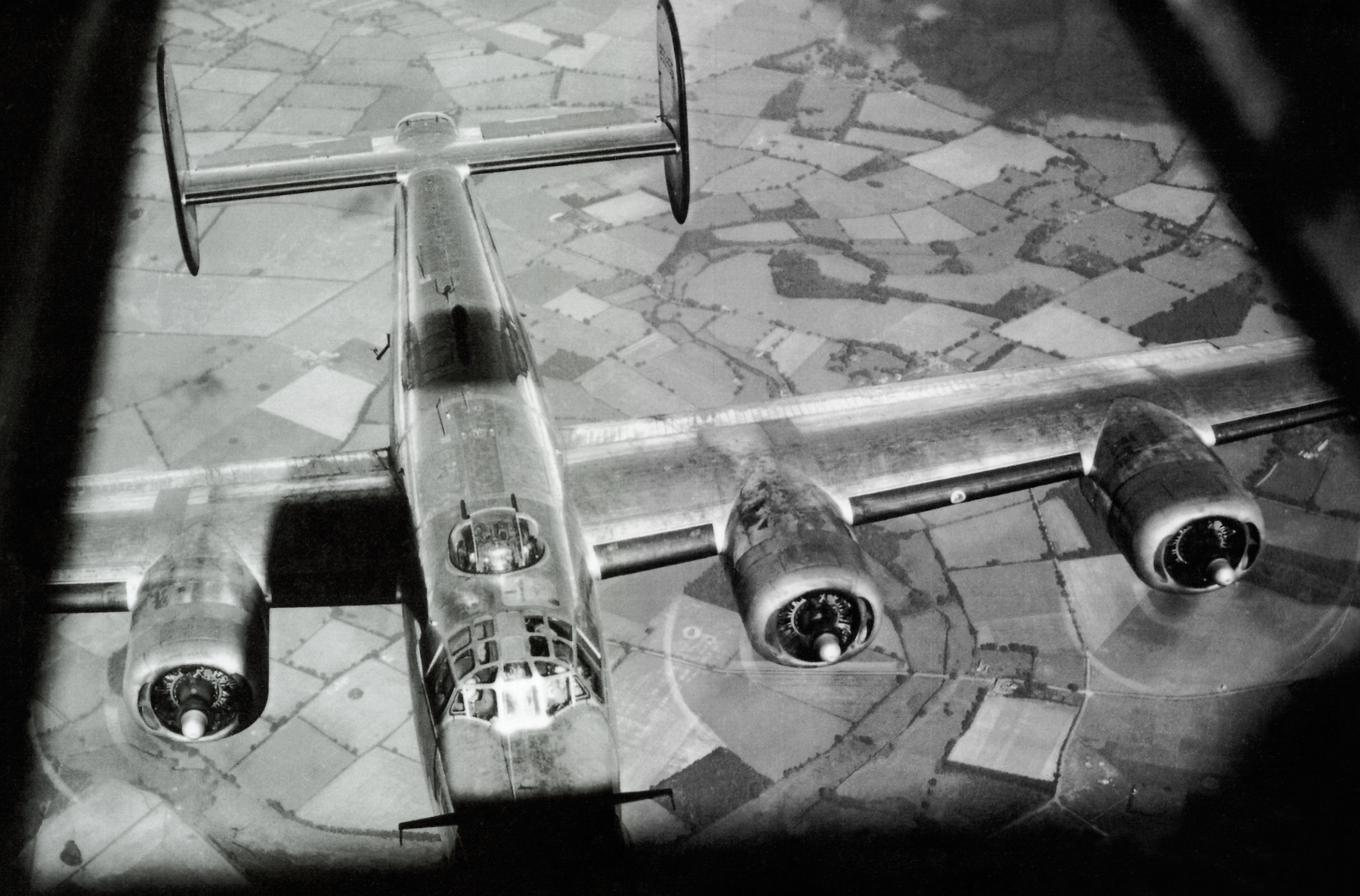
Top: A B-24 in flight taken from the waist window of an adjacent B-24. Bottom: The ice caps in Greenland as a B-24 approaches BW-1 Base in Greenland. (Source: Truslow Private Collection)

Hopping “across the pond” was a prolonged endeavor. Even in the advanced B-24 Liberator, the flight from the United States to England required multiple overnight stops for rest and refueling. All told, the flight time logged from the eastern seaboard of the United States to England was over 20 hours.

Because air traffic from the United States to Europe became so congested during the war, two different routes to England were established, named the Northern and Southern route.

Air Transport Command Ferry Routes, September 1945 (Source: NARA)

The Northern route wove from Canada to Greenland or Iceland, giving crews a glimpse of the Northern Lights and icy fjords before touching down in England.

The Southern route sent crews over lush jungles in South America before hopping east to Africa, with a final stop in Morocco after navigating over the towering Atlas Mountains.

Crashes getting to combat in England were so common that airman James Mahoney recalled: “An Air Transport Command Navigator once ventured that you could navigate the land portions of both routes by merely following the carcasses of fallen planes.”

3. Bomber crews spent hundreds of hours in combat fighting the Nazis but many never stepped foot on the European continent.

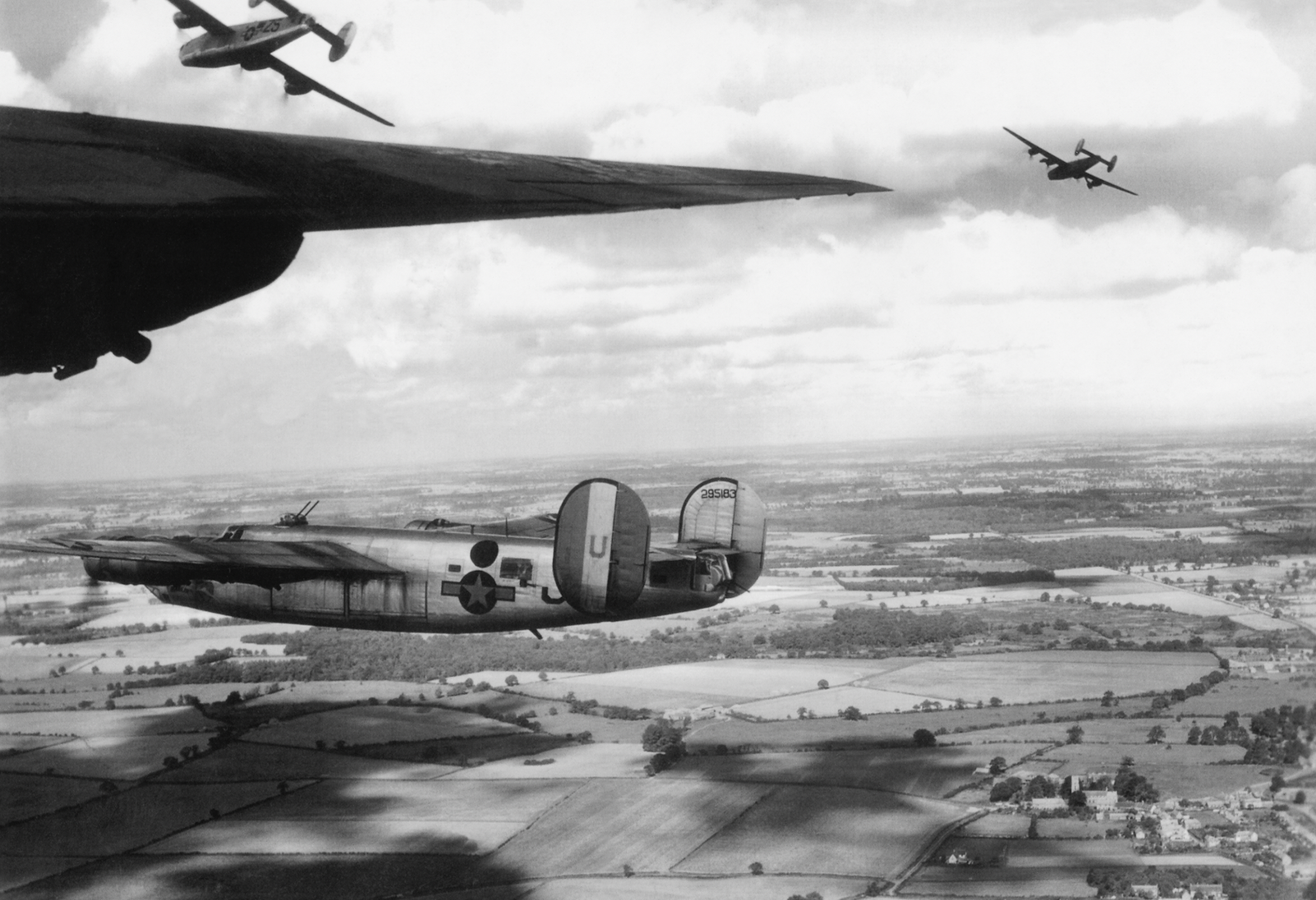
Top: B-24 bombers of the 44th Bomb Group over East Anglia in formation for a bombing mission over the continent. Bottom: The cockpit of a B-24 heavy bomber. (Source: Shipdham Flying Club Museum)

Up until the invasion of Italy and D-Day shortly thereafter, American air bases were located in England as part of the 8th Air Force.

By war’s end, a bomber crew had to fly 35 missions to complete a tour of duty and earn their ticket home. Thirty-five missions amounted to 200+ hours in combat over Fortress Europe clashing with Germans. Completing a tour spanned many months, sometimes taking an entire year.

If an airman was lucky, he never stepped foot on the ground where his war was fought. For bombers of the 8th Air Force, nearly every mission began and ended in England. In most cases, only if a crew was shot down, and survived the crash, did they touch down on the European continent.

4. American airmen wore almost 70 pounds of gear on combat missions to protect against -50 degree temperatures and enemy flak.

Top: Airmen of the 44th Bomb Group in the Drying Room on base where they donned heated flying suit and sheepskins. (Source: Shipdham Flying Club Museum) Middle: An airman of the 392nd Bomb Group in the waist of a B-24 bomber wearing a flak vest and helmet. (Source: 392nd Bomb Group) Bottom: An airman on a practice mission treating a wounded crew. His oxygen mask and Mae West life vest are clearly pictured. (Source: NARA)

Combat flying was hell. Heavy bombers were unpressurized and unheated. On day-long missions averaging six to eight hours, temperatures in a bomber regularly hit -50 degrees.

At altitude, bare skin would freeze to the aluminum fuselage and .50 cal machine guns. Oxygen masks iced up constantly. Thirty seconds without oxygen could knock a man unconscious; two minutes without oxygen could kill him.

To combat the cold, lack of oxygen, and enemy flak that sent shrapnel careening through bombers, airmen wore over 70 pounds of gear.

Heated flying suits, sheepskins, flying boots/gloves, Mae West life vests, parachute harness, and flak helmets/vests were just some of the gear an airman sported on every mission.

The bulk and weight of the gear made it difficult for an airman to maneuver through the cramped confines of a heavy bomber, but each piece of gear played a crucial role in keeping an airman alive.

5. On every mission, an airman carried a silk escape map of Europe — even though the fabric was in short supply during the war.

Top: A silk escape map showing France. Bottom: A silk escape map showing Holland, Belgium, France, and Germany. (Sources: Wings Remembered Museum) (Source: Sims Private Collection)

If an aircrew was shot down on a mission over Europe, they relied an escape kit, which was carried on every mission, to avoid capture and make it to friendly lines. A silk escape map was one piece of the escape kit.

Roughly three feet long by three feet wide, different geographic areas were printed on both sides of a silk escape map. As the war went on, the regions changed based on the areas where Allied bombing dominated. The maps showed roads, railways, and other landmarks to help an Allied airman evade the enemy.

However, why it was printed on a most coveted wartime fabric is perhaps the most interesting story.

Paper maps proved ineffective for airmen on the run because of the noise they produced when in use. Paper maps also proved vulnerable to water. Rain caused the ink to bleed or the map itself to disintegrate.

Silk was an effective alternative: durable, water-resistant, and easy to handle. Even though it was in short supply, silk was allocated for escape maps. Over 3.5 million silk and cloth maps were printed for Allied forces during the war.

6. Even in war, dogs remained man’s best friend.

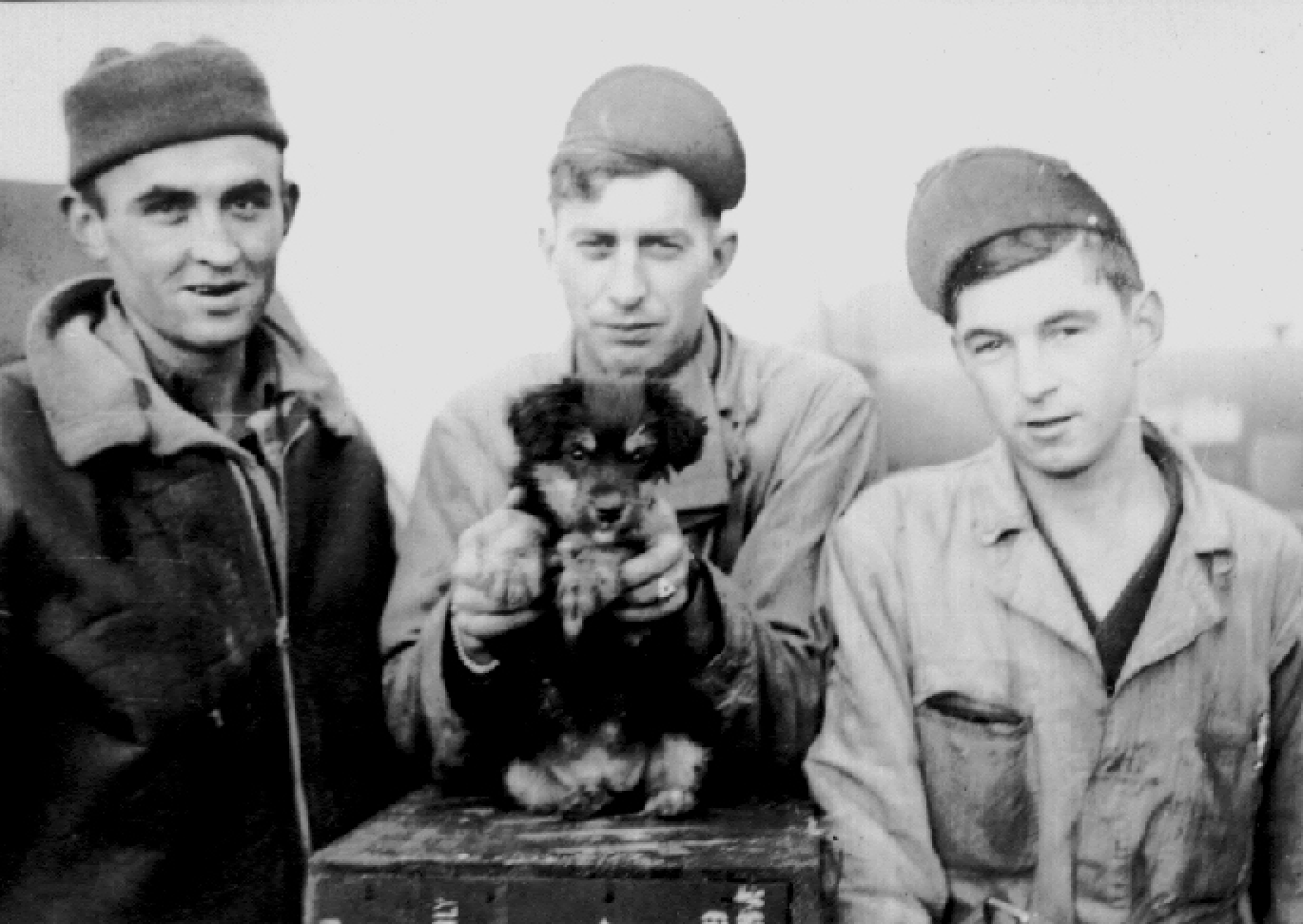
Top: Flakko at Shipdham Air Base airfiield site where ground crews prepared B-24s for bombing missions. Second: Flakko with 44th Bomb Group ground crewmen Collins, Kinning, and Villemez. Third: Rusty in the B-24 cockpit “Avenger” with 1st Lt. Peterson. Bottom: Rusty sitting atop a bomb waiting to be loaded into a B-24 bomb bay. (Source: Shipdham Flying Club Museum)

English dogs found adopted homes at American airbases during WWII. Beloved by all the men on base, dogs became ostensible mascots of Army Air Force Bomb Groups of the 8th Air Force.

The furry friends brought comfort and joy to an otherwise somber livelihood marked by cold English days, long missions, and omnipresent death.

Roaming bombs and ammunition at American airbases in rural England, dogs adopted by bomb groups lived at the epicenter of war.

On occasion, dogs were tucked inside a heavy bomber and taken for a flight. On the famed low-level Ploesti raid, the dog “Eight Ball,” so named for the 44th Bomb Group who adopted him, flew on the deadly raid. Tail Gunner Steve Bugyie recalled: “When the guns began to fire, Eight Ball curled up under the pilot’s seat and stayed there for the rest of the mission.” Needless to say, dogs did not belong in combat.

While the sentiment that “bomb group dogs” belonged to every man who lived on base, they were typically cared for by a select few. When the war ended and American airmen were sent stateside, leaving behind their beloved pets proved torturous.

At war’s end, ground crewman John Weber consulted the British Kennel Club because he wanted to bring “El Champo,” a Cocker Spaniel adopted by the 44th Bomb Group, back to the United States. When that proved impossible, Weber paid a local farmer to care for “El Champo.” For several years after the war, Weber made a yearly trip from Oregon to England to visit his beloved “El Champo.”

7. STDs were a widespread issue on airbases that posed a threat to winning the war.

Top: Piccadilly Circus in wartime London. American airmen flocked to London on leave and overnight accommodation was available at the Rainbow Club run by the American Red Cross. (Source: American Air Museum) Bottom: Excerpt of a daily briefing from August 15, 1944, which would have been posted across an Army Air Force Base with mission-critical announcements for airmen. (Source: 44th Bomb Group Microfilm from Maxwell Air Force Base)

Demographically, American airmen were young and overwhelmingly single. According to recently analyzed NARA enlistment data, 77% of airmen in the 44th Bomb Group were single without children when they enlisted.

Sequestration on an all-male airbase, coupled with the life and death stress of combat, led sexual frustration to mount. Leave in London proved an easy release for the pent up sexual tension. From their airbases in East Anglia, American airmen flocked to Piccadilly Circus. Their presence brought rampant prostitution to the area.

With sex came widespread STDs. Referred to during the war as Venereal Disease (VD), an estimated one-third of VD cases amongst GIs were said to have originated in London.

VD posed a threat to winning the war, as afflicted airmen were grounded from flying combat missions for several days until their health improved.

Airbase leaders combatted VD with lectures, free-flowing condoms, and publicly displaying daily statistics about the number of VD cases on base. Yet, VD proved to be a protracted battle.

A 1944 Medical Report submitted by the 44th Bomb Group noted: “Repeated lectures on venereal diseases, far in excess of that required by Army regulations, have been given to all members of this command. Prophylaxis is available to men, as are condoms. Few use them. This is indicative of the carelessness of and disinterest of the men for their personal good and the good of the service.”

8. English country estates were requisitioned and turned into retreats called “Rest Homes” for war-weary airmen.

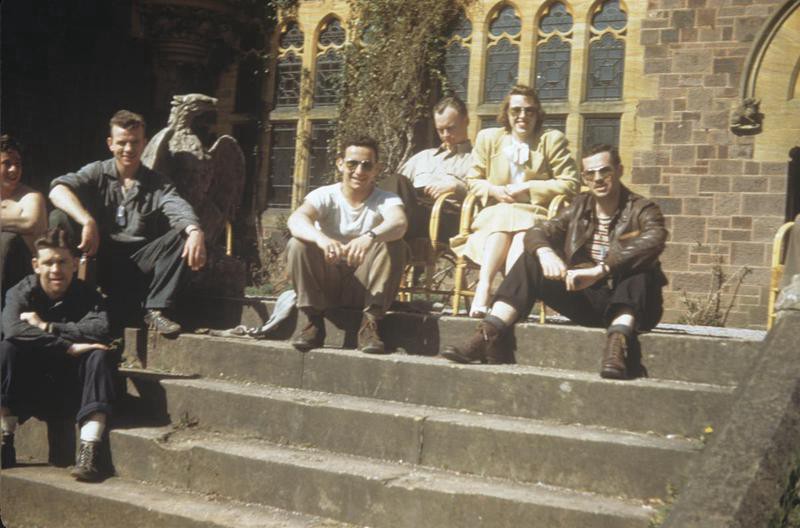
Top: Knightshayes Court was built in 1874 for the Heathcote-Amory family. During the war, it became a Rest Home for American airmen stationed in England with the 8th Air Force. Bottom: American airmen, including E.F. Wilson, at the Knightshayes Court Rest Home in April 1945. (Source: American Air Museum)

Run by the American Red Cross, Rest Homes were country estates where war-weary airmen midway through a combat tour to recharge and relax for a week.

The psychiatric strain of combat flying led to the creation of over 20 Rest Homes in England. Manor homes and country estates throughout England were handed over by their owners for use as Rest Homes.

The Rest Home program was viewed as preventative care to keep American airmen in good psychological health. An air crew was typically sent to a Rest Home halfway through a tour of 25 to 35 missions or after a particularly traumatic event.

The goal was to give American airmen a reprieve from the war for a week. Upon arrival, airmen were given civilian clothes. They slept in beds with lush linens. The breakfast menu included real eggs and bacon. Red Cross girls entertained airmen during the day with games and myriad activities on each estate. Rest Home dinners were a nightly lavish affair, including an open bar.

9. Run by the American Red Cross, “Clubmobiles” were bakeries on wheels offering rare treats at airbases — donuts, coffee, & interaction with women.

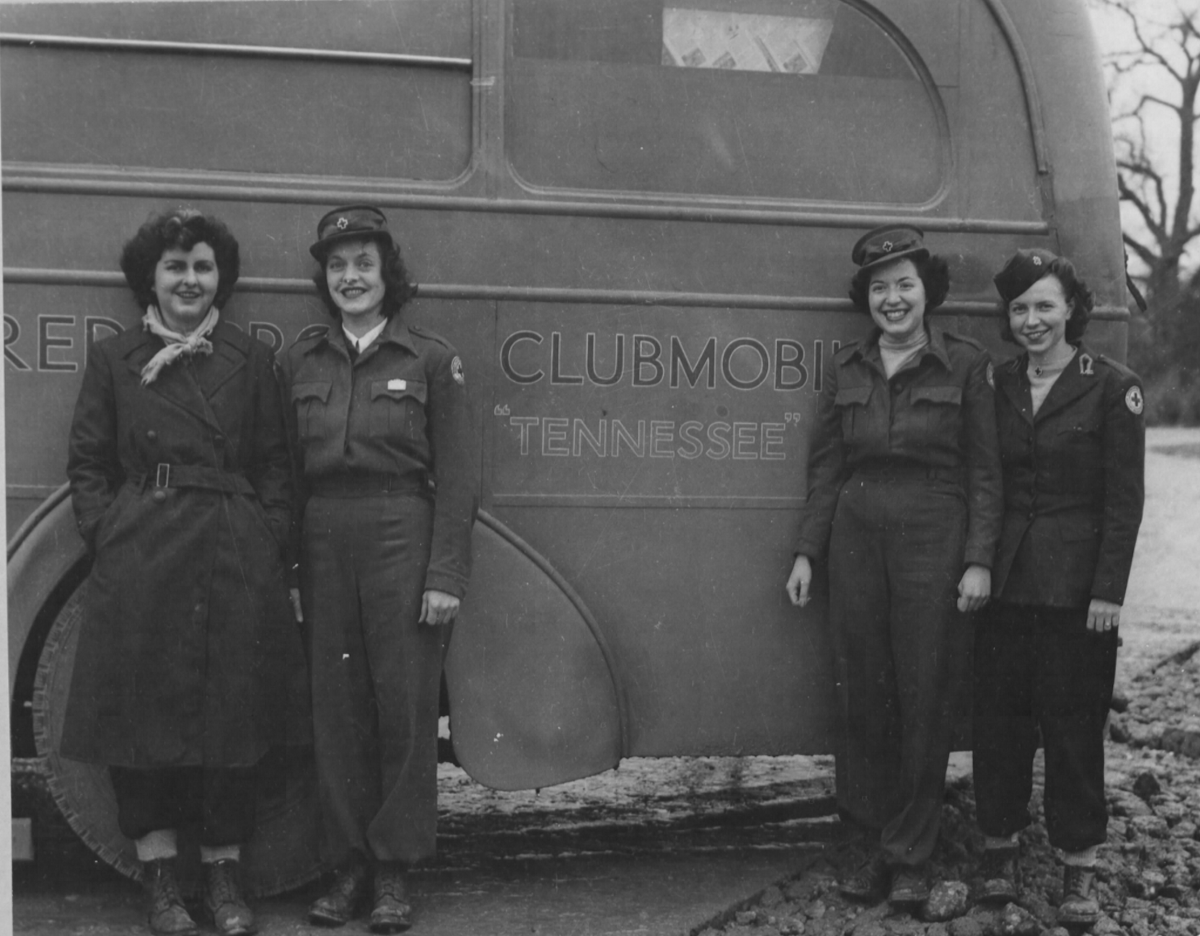
Top: Ground crews and airmen of the 44th Bomb Group Bottom: American Red Cross Workers Pose Beside the Clubmobile, nicknamed ‘Tennessee’ at An 8th Air Force Base In England, 3 November 1943. (Source: NARA)

The American Red Cross ran a robust assortment of morale-boosting activities for American airmen in England, including the “Clubmobile.”

Described as a service club on wheels, a “Clubmobile” was a London Bus retrofitted as an ostensible food truck.

Upon arrival at an airbase, a “Clubmobile” parked near the heart of combat operations adjacent the runways. American Red Cross girls brewed coffee and fried donuts from the small kitchen inside the bus. A victrola played music while dozens of men waited in line. On an average day, 5,000 donuts were served from a single “Clubmobile.”

Donuts were a treat in short supply, a result of food rationing and the English opinion they were “ethnic food.” The “Clubmobile” brought a slice of home to “donut desolate” wartime England.

10. Dances brought live music, local women, and good cheer to the epicenter of the air war.

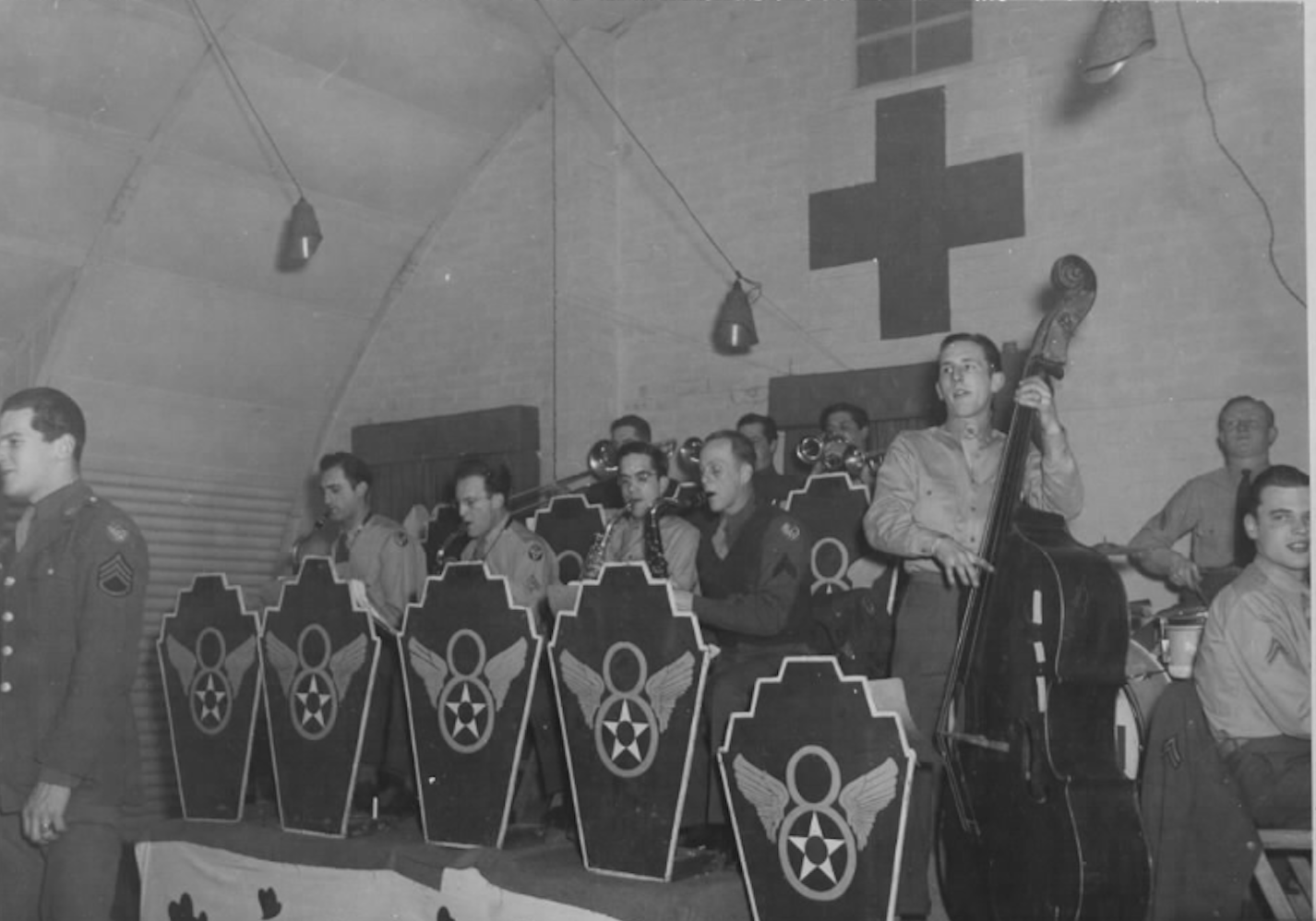
Top: Airmen of the 44th Bomb Group at the Aero Club on Base. (Source: Shipdham Flying Club Museum) Bottom: Band play for a dance at the 381st Bomb Group Aero Club on February 14, 1944. (Source: NARA)

Dances organized by the American Red Cross gave airmen an opportunity to blow off steam from the intense stress of the air war.

Aero Clubs on American airbases regularly transformed into dance halls featuring live swing music, often courtesy of an airbase’s band formed from the roughly 3,000 personnel who called each base home.

The 44th Bomb Group band was started by Bombardier Paul Boensch, who studied music before the war. Maintenance men in the group built music stands, and instruments were hobbled together. Boensch recalled, “Our best break came when Major Linck learned that a band of German musicians was captured at St. Lo after D-Day. Twenty-four hours later, we had all their instruments, all in first class condition.”

In addition to the live music, women from local villages were trucked to airbases for evening dances. It was a formal affair as airmen donned their best Class A uniforms.

Typically held once a month, dances proved popular with airmen with a vast majority attending the evening affairs. The music, dancing, and female company gave airmen a few hours to forget about the war.